Castello dei Pico - in ristrutturazione
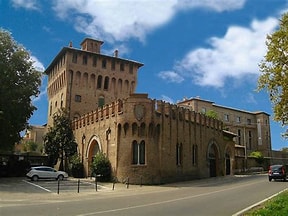
Il Castello dei Pico è situato nel centro storico di Mirandola, circondato dal e vicino la piazza rinascimentale. Il viale alberato che lo contorna segna il tracciato delle antica mura demolite alla fine dell'800. Simbolo del potere militare della famiglia dei Pico e anticamente famoso per la sua inespugnabilità, vide nascere nel 1463 il personaggio mirandolese che ha dato maggior lustro alla città, Giovanni Pico: il filosofo e umanista Giovanni Pico he fu l'artefice del manifesto del Rinascimento con il trattato " De hominis dignitate". A metà del '600 sotto il governo del Duca Alessandro II Pico il castello si ampliò ulteriormente con la costruzione della Galleria Nuova che fu realizzata per accogliere la quadreria che comprendeva oltre 300 opere di famosi pittori. Le diverse guerre che si succedettero nel '700 distrussero fortificazioni e torri del castello che subì varie manomissioni nei due secoli successivi. Negli anni '30 del '900 parte del Castello dei Pico fu restaurato e ricostruito ad opera dell'architetto Guerzoni. Restaurato nel 2006 dopo anni di abbandono, è stato reso nuovamente inagibile dal terremoto del 2012. Il progetto della sua ricostruzione è in fase avanzata.
Testi a cura di La Nostra Mirandola
Se vuoi sapere di più ...
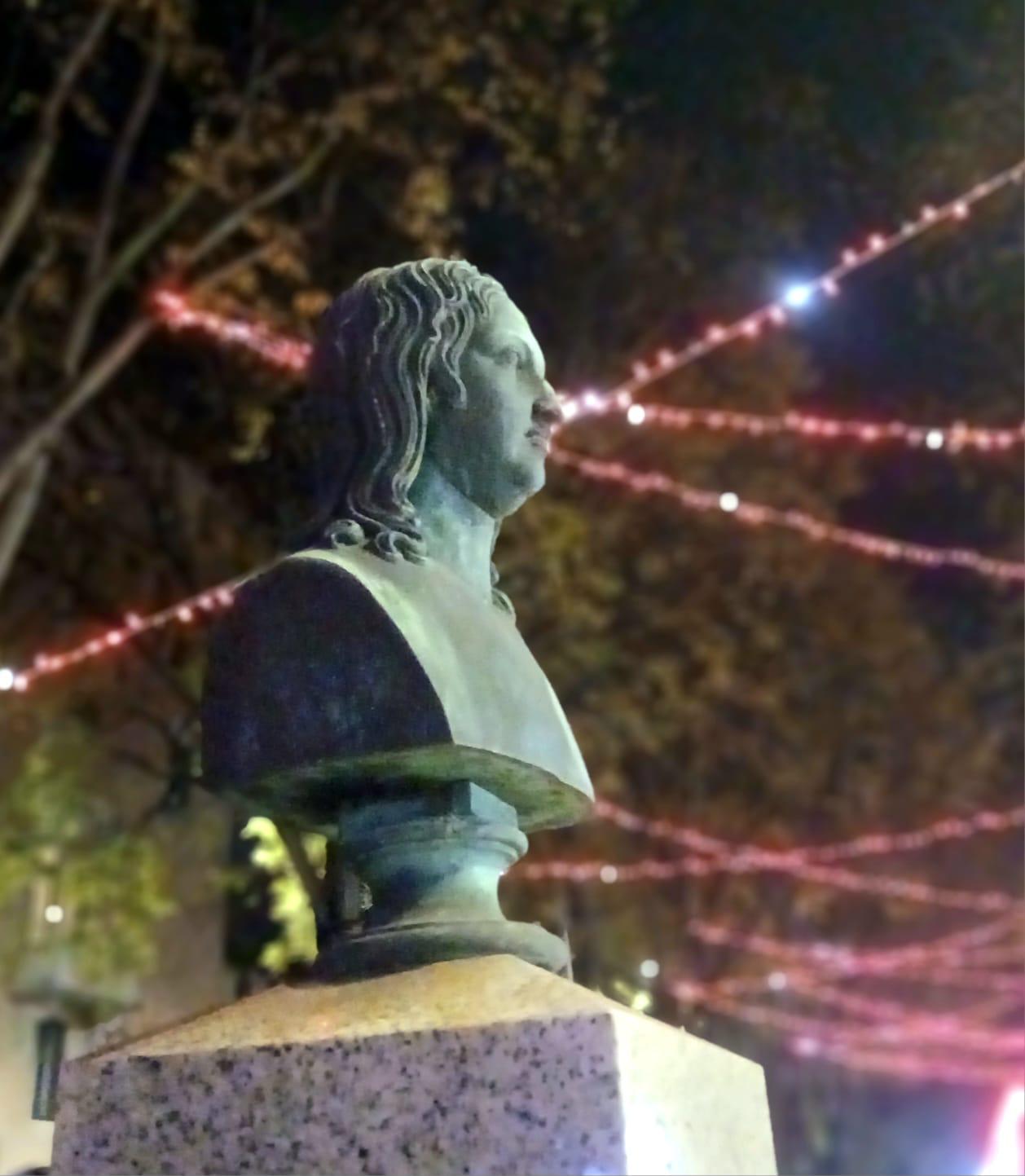
Il busto collocato davanti al Castello in Piazza Costituente (nel controviale) è una copia in bronzo risalente al 1963 del busto che era collocato nella navata di destra della Chiesa di San Francesco (oggi non agibile a causa degli eventi sismici del 2012). Quel busto lo realizzò lo scultore Giuseppe Pisani nel 1824. Nella stessa stessa Chiesa si trovavano anche le tombe del padre, della madre e di un fratello di Giovanni Pico della Mirandola.
E chi si troverà a passeggiare al Pincio di Roma può salutare Pico, busto fra busti, nel viale detto degli Ippocastani.
Testo tratto da “Pico della Mirandola” di Jader Jacobelli (prefazione Eugenio Garin)
Pico's Castle
The Pico Castle is located in the historic center of Mirandola, surrounded by and near the Renaissance square. The tree-lined avenue that surrounds it marks the route of the ancient walls demolished at the end of the 19th century. Symbol of the military power of the Pico family and formerly famous for its impregnability, in 1463 saw the birth of the Mirandola character who gave greater prestige to the city, Giovanni Pico: the philosopher and humanist Giovanni Pico who was the creator of the Renaissance manifesto with the treatise "De hominis dignitate". In the mid-1600s, under the government of Duke Alexander II Pico, the castle was further expanded with the construction of the New Gallery, which was built to house the picture gallery that included over 300 works by famous painters. The various wars that followed one another in the 1700s destroyed the fortifications and towers of the castle which underwent various alterations in the following two centuries. In the 1930s, part of the Castello dei Pico was rebuilt and rebuilt by the architect Guerzoni. Restored in 2006 after years of neglect, it was made unusable again by the 2012 earthquake. The project of its reconstruction is at an advanced stage.
Texts edited by La Nostra Mirandola
If you want to know more...
The Bust located in front of the Castle in Costituente square (in the side street) is a bronze copy dating back to the 1963 of the original bust that was located in the right nave of the Church of San Francesco (which is not accessible nowadays as a consequence of the seismic events of 2012). That bust was made by the sculptor Giuseppe Pisani in 1824. In the same church there were also the graves of Giovanni Pico's father, mother and brother.
And whoever strolls in the Pincio of Rome can greet Pico, bust among busts, on the path known as the Chestnut Tree Avenue
Excerpt from "Pico della Mirandola" by Jader Jacobelli (preface by Eugenio Garin)